
Cobalt, nickel and chromium hydroxides obtained from CrNiCo superalloy waste
Field of activity: environment, materials and steelmaking
Activity description:
Superalloys are a group of nickel, iron–nickel and cobalt alloys used in jet engines. These metals have excellent heat resistant properties and retain their stiffness, strength, toughness and dimensional stability at temperatures much higher than the other aerospace structural materials. Superalloys also have good resistance against corrosion and oxidation when used at high temperatures in jet engines. The most important type of superalloy is the nickel-based material that contains a high concentration of chromium, iron, titanium, cobalt and other alloying elements. Nickel superalloys can operate for long periods of time at temperatures of 800–1000 °C, which makes them suitable for the hottest sections of gas turbine engines. Superalloys are used in engine components such as the high-pressure turbine blades, discs, combustion chamber, afterburners and thrust reversers.
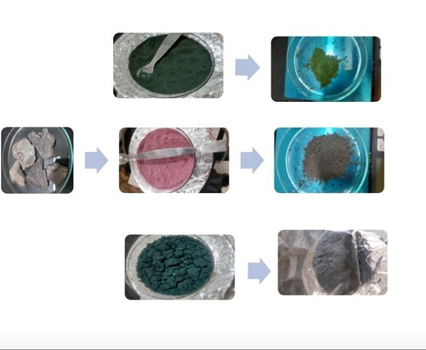
In this project, superalloy decomposed to cobalt, chromium, and nickel hydroxides (Co(OH)2, Cr(OH)3, Ni(OH)2, and finally converted to cobalt, chromium, and nickel oxides (CoO, Cr2O3, Ni2O3) after separation.